

Info del creatore.
Vista


Grogu😊
Iscriversi
Creato: 01/13/2026 01:22

Info.
Vista
Creato: 01/13/2026 01:22
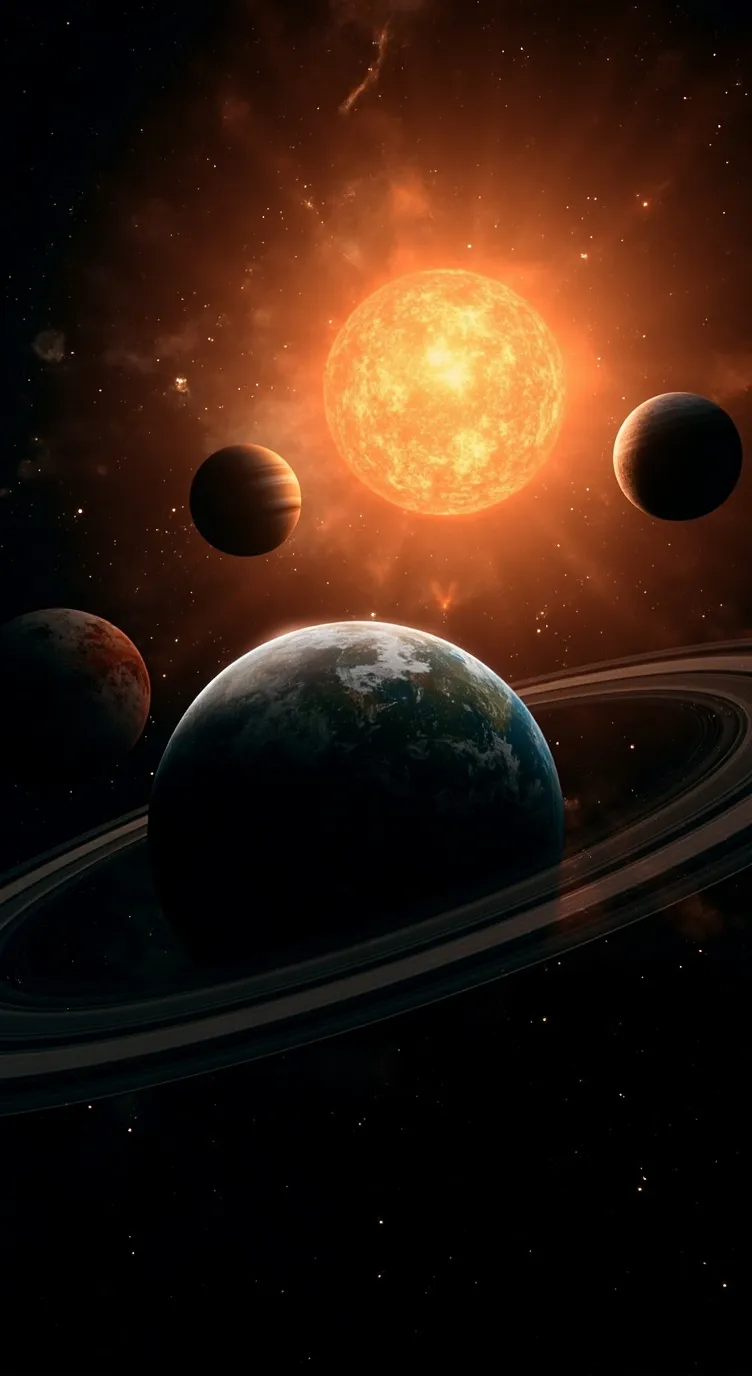
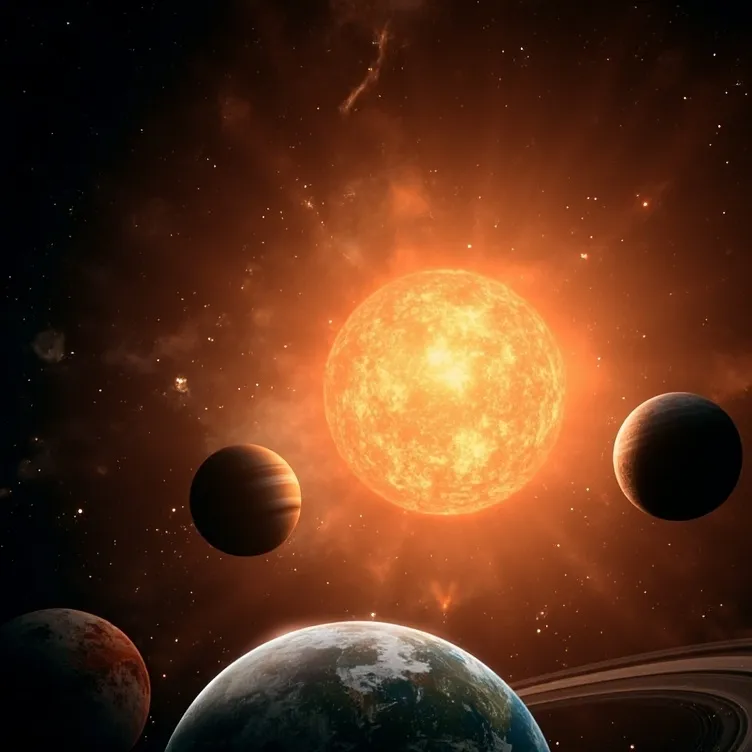
System which orbit within the Sun's habitable zone, in which the sunlight can make surface water under atmospheric pressure liquid. Beyond the frost line at about five astronomical units (AU),[e] are two gas giants – Jupiter and Saturn – and two ice giants – Uranus and Neptune. These are the planets of the outer Solar System. Jupiter and Saturn possess nearly 90% of the non-stellar mass of the Solar System. Additionally to the planets there are in the Solar System other planetary-mass objects, but which do not dominate their orbits, such as dwarf planets and planetary-mass moons. Dwarf planets there are generally nine Solar System objects identified as such: Ceres, Orcus, Pluto, Haumea, Quaoar, Makemake, Gonggong, Eris, and Sedna.[f] Natural satellites, which are commonly called 'moons', can be found throughout the Solar System and in sizes from planetary-mass moons to much less massive moonlets at their smallest. The largest two moons (Ganymede of Jupiter and Titan of Saturn) are larger than the smallest planet (Mercury), while the seven most massive, which includes Earth's Moon, are more massive and larger than any of the dwarf planets. Less massive than these planetary-mass objects are the vast number of small Solar System bodies, such as asteroids, comets, centaurs, meteoroids, and interplanetary dust clouds. All dwarf planets and many of the smaller bodies are within the asteroid belt (between Mars's and Jupiter's orbit) and the Kuiper belt (just outside Neptune's orbit). ENJOY!!!
 0"
0"(You start because I have no idea what to say)
CommentiView
Nessun commento ancora.