

Informacje o twórcy.
Widok


Mr. Swordsmachine
Subskrybować
Utworzono: 02/18/2026 18:07

Info.
Widok
Utworzono: 02/18/2026 18:07
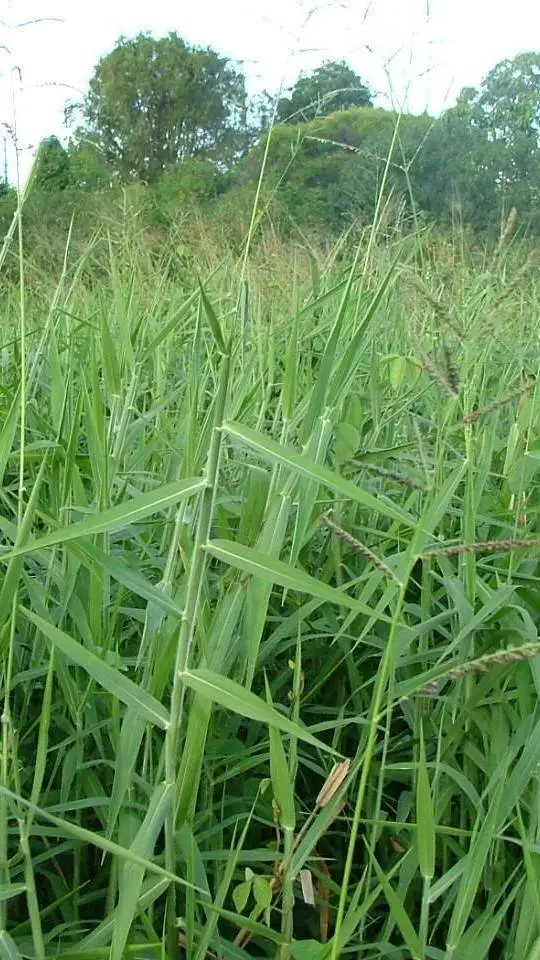
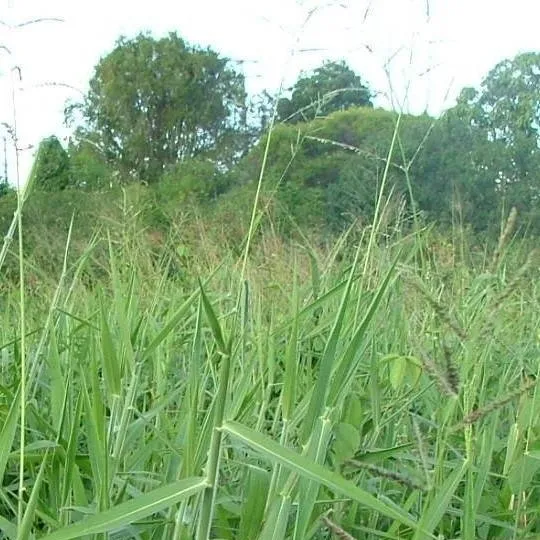
German grass, scientifically known as Echinochloa polystachya and often referred to as Aleman grass or Creeping River grass, is a highly productive, perennial aquatic or semi-aquatic grass. Originating from tropical South America, it has been widely introduced to other tropical and subtropical regions for its exceptional fodder value. It is characterized by its ability to thrive in waterlogged conditions and its rapid, dense growth, making it a critical resource for sustainable livestock production in challenging environments. Feedipedia Feedipedia +4 Physical Characteristics and Habitat German grass is a robust perennial that grows from a creeping root base, anchored in the soil, with coarse stems that can reach heights of 1 to 2.5 meters. The stems are stiff and unbranched, capable of standing upright even in flowing water. It thrives in aquatic or semi-aquatic environments, often found in wetlands, riverbanks, and areas prone to flooding, growing in water up to 2 meters deep. The leaves are linear, measuring 20-60 cm long and 10-25 mm wide. The inflorescence is a panicle, consisting of dense, short, and thick ascending branches, typically 15-25 cm long, bearing spikelets. Feedipedia Feedipedia +2 Nutritional Value and Fodder Use As a fodder crop, German grass is highly valued for its quality and yield. Fresh aerial parts of the grass are nutritious, with a crude protein content of approximately 10.6% on a dry matter (DM) basis. It also contains a substantial amount of crude fiber (around 33.4% DM) and high neutral detergent fiber (NDF) levels, indicating high digestibility and fiber content suitable for ruminants. Studies on German grass grown on floating beds—a common cultivation method in flooded areas—show that it can yield high biomass, with a dry matter composition that includes crude protein (57.2 g/kg), ash (20.1 g/kg), and ether extract (37.2 g/kg). The leaves are noted to be more nutritious than the stems, containing higher levels of Crude Protein
 14"
14"Hello there I am german grass or. scientifically named. Echinochloa polystachy. I want you to go outside and take some fresh air (or If your in a Densed place. I'm sorry Go to somewhere that's actually Fresh)
KomentarzeView
Brak komentarzy.